Fifth Module Training on Sustainable Livelihood Strategies Successfully Held in Trenggalek
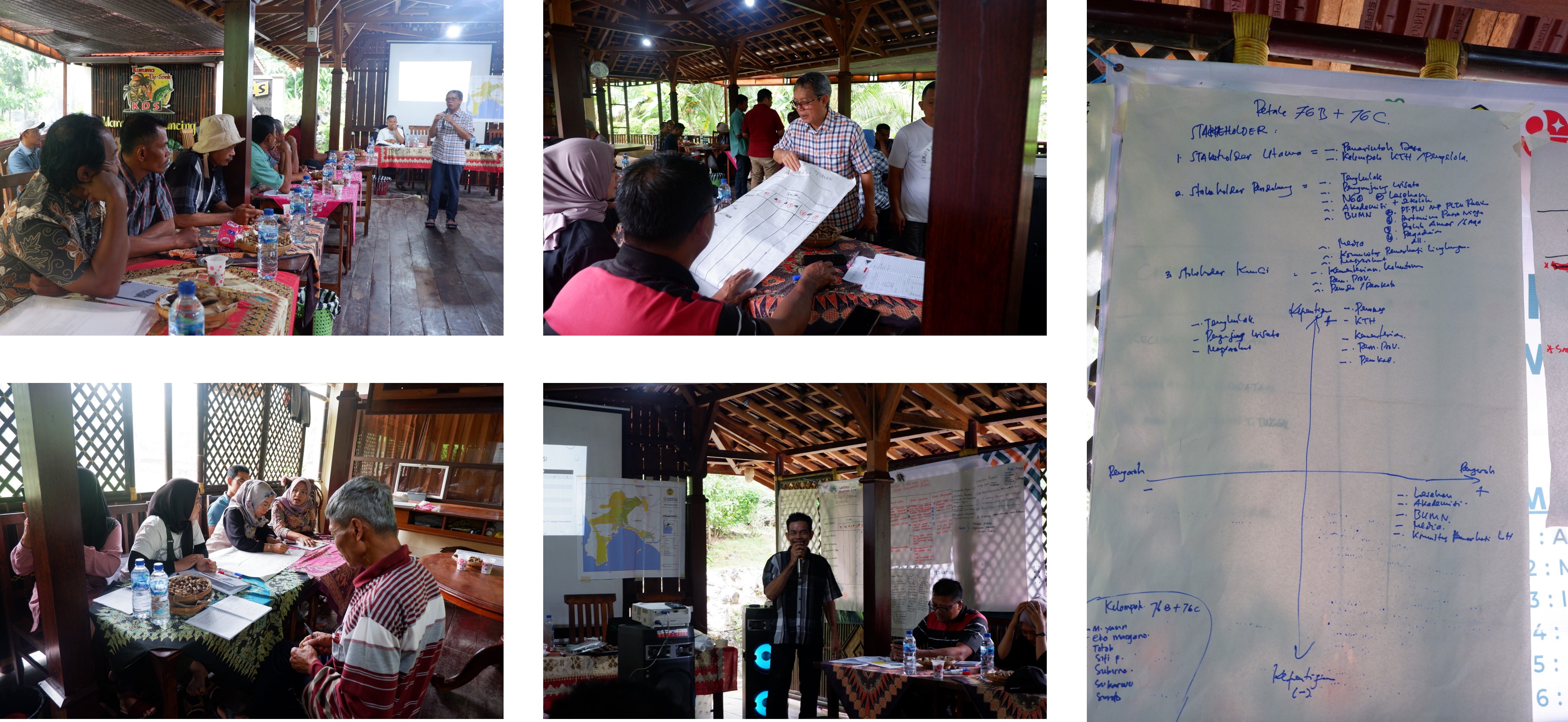
Trenggalek, July 12, 2025 – In an effort to enhance community capacity in managing natural resources sustainably, LeSEHan organized the Trial Module 5 training with the theme "Sustainable Livelihood Strategies" at Kusuma De Sonk (KDS), Wonocoyo Village, Panggul Sub-district, Trenggalek Regency. The event was attended by 22 participants representing various local community groups.
Focus on Community Empowerment
The training was facilitated by two experts: Prof. Rahmanta Setiahadi from Merdeka University in Madiun and Hale Irfan Safrudi, Director of The Instutute of Forest Ecosystem Study (LeSEHan). The training materials focused on assessing community livelihood aspirations, mapping supporting and inhibiting factors, and implementing a sustainable livelihood framework covering five key assets: human, natural, financial, physical, and social.
Participants were encouraged to identify their priorities, with "Income Security" and "Health Access" emerging as the two main issues requiring improvement. Additionally, they discussed practical solutions, such as forming Joint Business Groups (KUPS) for collective marketing and adopting agroforestry to mitigate the impacts of climate change.
Outcomes and Follow-Up Plans
The training produced several key documents, including:
- Livelihood Aspiration Matrices: Highlighting community priorities for improving welfare.
- Action Plans: Including the establishment of KUPS and the adoption of sustainable farming practices.
- Stakeholder Maps: Identifying potential partners such as local NGOs and government agencies, as well as challenges like land conflicts with the private sector and Perhutani (State Forest Company).
Some important lessons from the training included:
- Local wisdom, such as seed banks managed by women's groups, is crucial for sustainability.
- Inclusivity is vital, particularly in engaging marginalized groups like women and indigenous communities.
- Climate adaptation through training on drought-resistant crops and early warning systems needs to be strengthened.