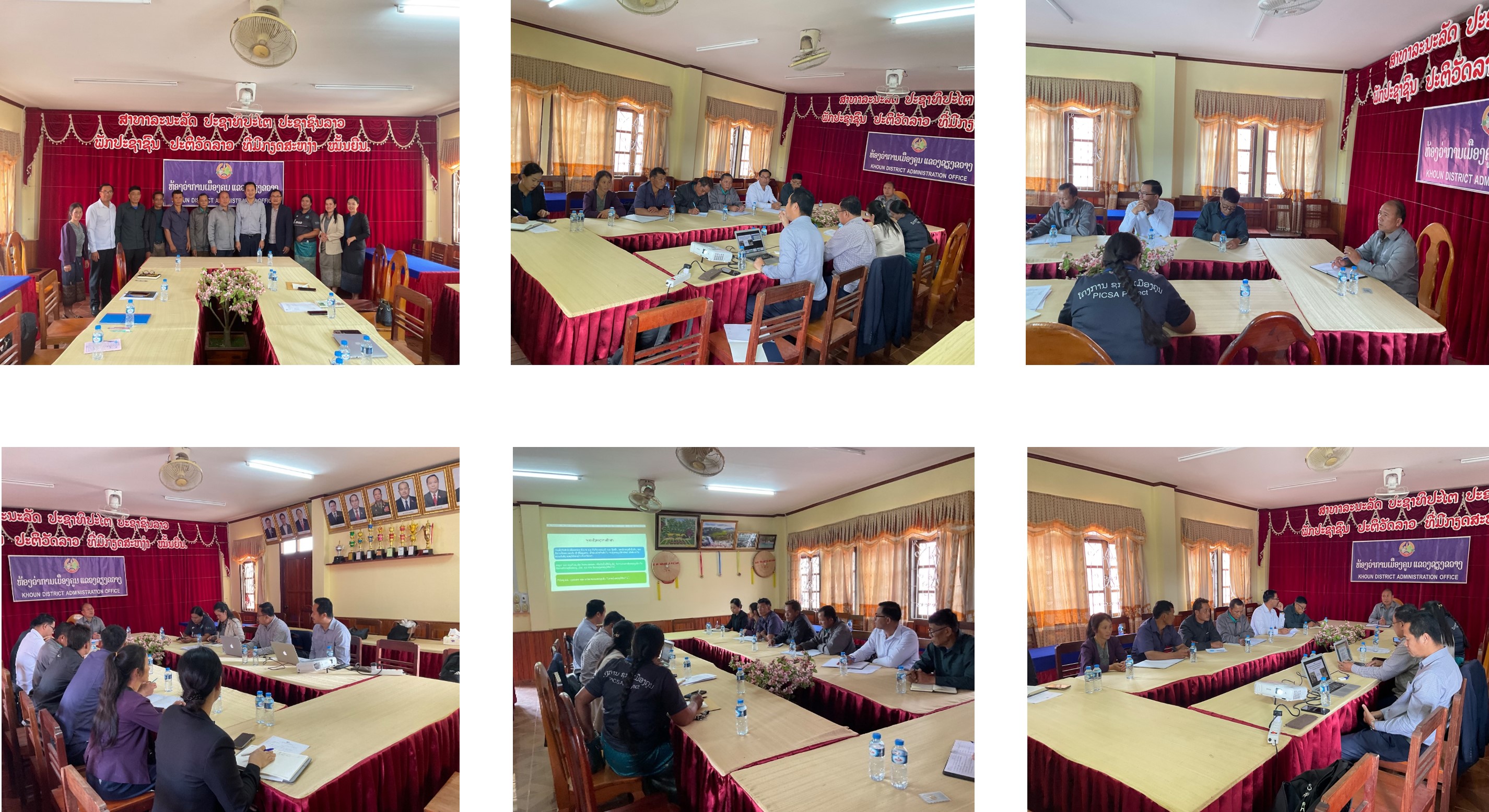
Workshop Stakeholder in Xiengkhouang Province
2025-07-19
Education
Enhancing Gender and Ecological Justice in Forest Governance
Xiengkhouang Province, Laos – From June 2 to 3, 2025, a significant follow-up activity under the project "Centering Gender and Ecological Justice in Southeast Asia Forest Landscape Governance: Lessons from Indonesia and Lao PDR" was conducted in Xiengkhouang Province. Led by Dr. Sypha Chanthavong, the initiative brought together researchers, provincial authorities, and local villagers to validate findings and discuss policy implications for sustainable forest management.
Key Activities and Outcomes
The event comprised two main components:
- Validation Workshops: Researchers returned to selected villages to present preliminary findings from the 2024 fieldwork. These workshops aimed to ensure community ownership of the research by soliciting feedback on the accuracy and relevance of the data.
- Stakeholder Dialogue Meetings: Meetings with district and provincial authorities (20 attendees in total) focused on sharing research progress, discussing policy implications, and exploring ways to integrate gender and ecological justice into local governance frameworks.
Impact and Achievements
The follow-up activities yielded tangible results:
- Enhanced Awareness: Stakeholders gained deeper insights into the role of gender inclusion in forest conservation, the importance of environmental laws, and the detrimental effects of deforestation on livelihoods.
- Empowerment of Endo Women: The project empowered local women to actively participate in protecting forests, rivers, and the environment, while discouraging harmful practices like burning.
- Foundation for Future Initiatives: The validated data will serve as a cornerstone for evidence-based initiatives in 2026, including educational resources and targeted community engagement strategies.
The project underscored three key principles for sustainable forest governance:
- Long-Term Engagement: Building lasting relationships with communities and authorities is essential for systemic change.
- Participatory Ownership: Involving communities in co-designing solutions fosters ownership and enhances sustainability.